Traffic Pursuit Unit arc42 section 8
Crosscutting Concepts
8.1 Domain Entity Model
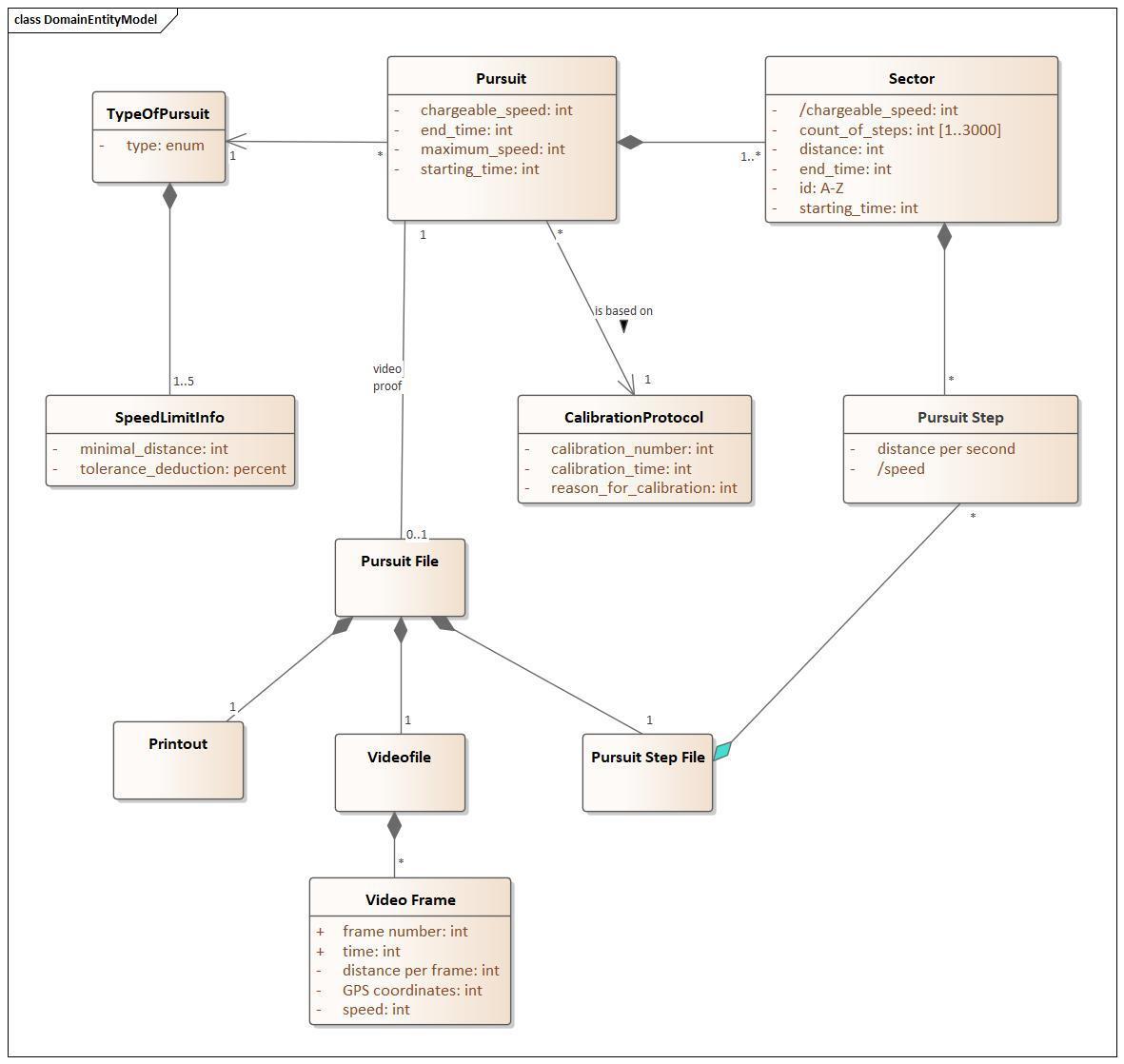
| Term | Definition |
|---|---|
| Frame Interval | the smallest period for data sampled by the TPU. It corresponds to the duration of one video frame, which is 40 milliseconds for a frequency of 25 video frames per second. |
| Distance Per Frame | the distance (in millimeters) travelled during one frame |
| Distance Per Second | the distance (in millimeters) travelled during one second |
| Pursuit Step | the measured and calculated data for one second within a pursuit. It consists of pursuit duration, distance, current speed, current maximum violation. |
| Pursuit Step File | a file containing all pursuit steps |
| Pursuit File | a file containing the video, the pursuit step file and the printout for one pursuit |
| Pursuit Protocol | second-by-second logging of the driven speed + pursuit summary |
| Sector | a part of a complete pursuit |
| Video Frame | one picture within a video stream. Usually we have 25 frames per second. |
8.2 Event Handling
Motivation
In a system with several components generating a variety of events, that should be handled by appropriate event handlers, we face the following problems:
- In a robust and flexible architecture, components that generate events should be kept free of any knowledge about the handling of these events (separation of concerns). So they are not able to deliver the events they produce to the right destinations. An appropriate event propagation concept is needed.
- An event handler in general does not want to be prepared to handle a newly arriving event while just handling one event. Especially if the handling of the current event may result in a change of state leading to a different handling of successive events.
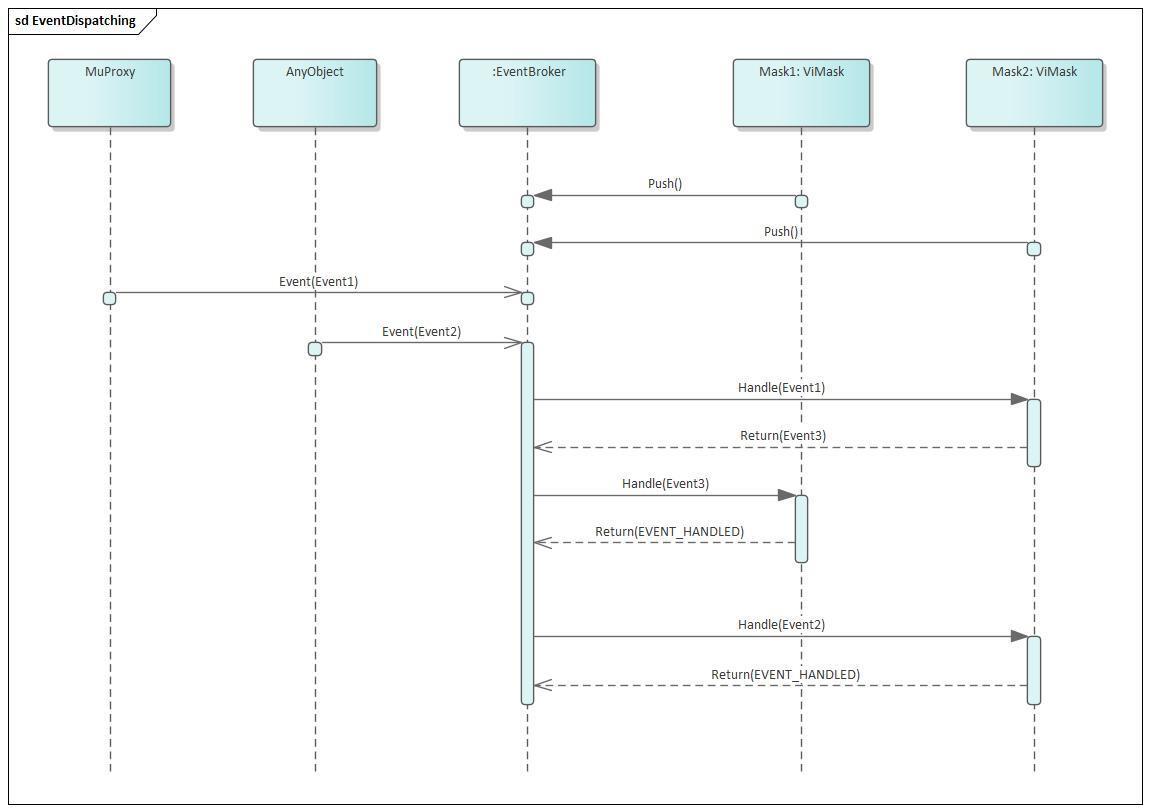
Within the TPU many different events are generated, partly as a result of measurements on a periodic time base and partly asynchronously like user input or special system events (e.g. disk space warning). These events are generated from different building blocks and are managed in a central event queue for sequential delivery on one single thread. On that thread the events are delivered to event handlers, which are organized in a stack. The first queued event is offered to the topmost event handler on the stack. The handler can decide to consume it, or return the same or a different event for delivery to the event handler located on the previous stack position.
Solution